
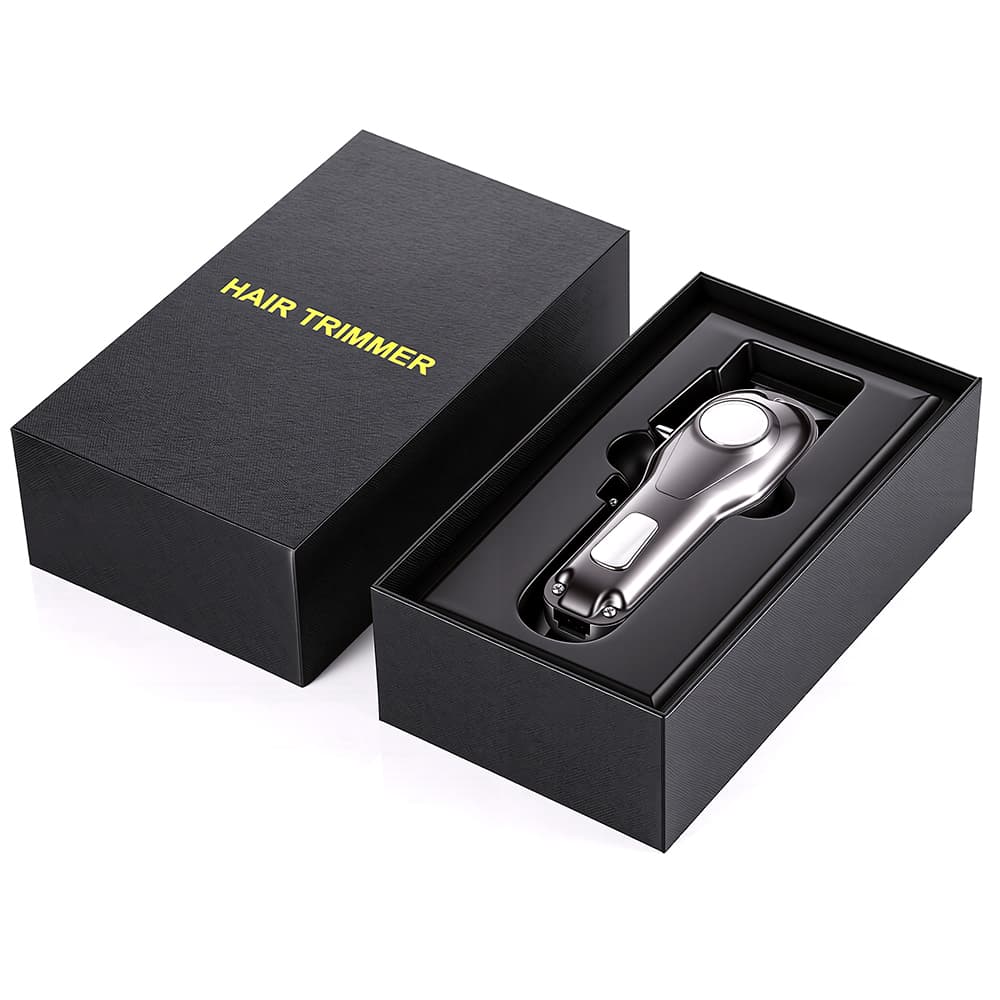
An electric kettle wholesale order can look simple until two quotations use the same capacity but cover very different products. Body construction, rated power, controller behavior, plug, cord, lid, packaging, and test documents all affect the market version. Importers and private-label appliance brands therefore need a specification that is commercial enough for the retail team and precise enough for the supplier. The RAF electric kettle range offers glass, stainless steel, temperature-control, travel, and tea-set formats that can serve as practical reference points.
Define the Market Version Before Comparing Prices
Lock the electrical configuration first
Country comes before color. State the destination market, rated voltage, frequency, plug type, cord requirements, and any local labeling rules in the first RFQ. A kettle shown online as a 220V model should not be assumed to have a ready 120V equivalent. Power also needs context. Higher wattage may shorten heating time, but it changes current draw and may affect the plug, cable, controller, and test program.
Ask the supplier to quote one named configuration. The rating label, user manual, sample, test records, and production unit should all describe that same version. This small discipline prevents a common sourcing problem: approving a sample with one electrical setup while reviewing documents for another.
Give the kettle a job in the retail range
Define where it will sell and why it belongs there. A compact office or hospitality offer may favor a smaller capacity and a direct switch. A family model may need 1.7L to 2.0L, a clear water level, and a comfortable pour when full. A feature-led online listing can support temperature selection or keep-warm controls, provided the interface is easy to explain and test.
The brief should name the channel, intended user, target price tier, required visual direction, and must-have functions. Without that context, a long feature list usually produces a less useful quotation.
Select Material and Capacity as One Decision
Glass supports visibility and a feature-led display
Glass shows the water level and boiling action clearly. It can work well for retail photography and for buyers who want a more visible product story. The tradeoff is that buyers need to inspect the glass-to-base joint, handle attachment, lid fit, weight, and protection inside the retail pack.
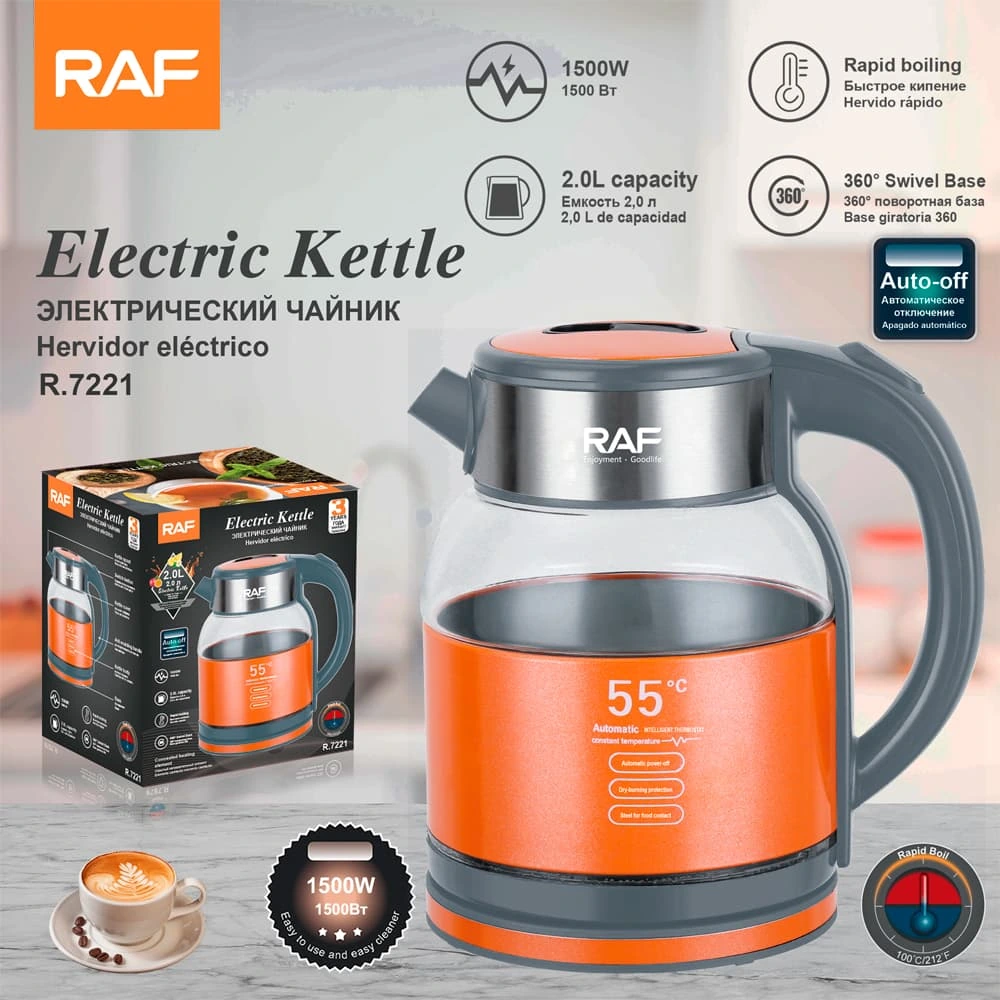
The RAF R.7221 glass electric kettle is a useful 2.0L reference. Its current product page lists 1500W heating, a 55 C keep-warm setting, automatic power-off, and a 360-degree swivel base. Those details make it suitable for discussing a larger glass format, but the buyer should still confirm the exact market version and control behavior in the sample.
Stainless steel can support a compact or durable position
Stainless steel bodies suit ranges where a less transparent, more conventional appliance look is preferred. Construction matters more than the material label alone. Ask whether the water-contact interior is stainless steel, how seams and the spout are finished, whether external surfaces become hot, and whether the model uses single-wall or double-wall construction.
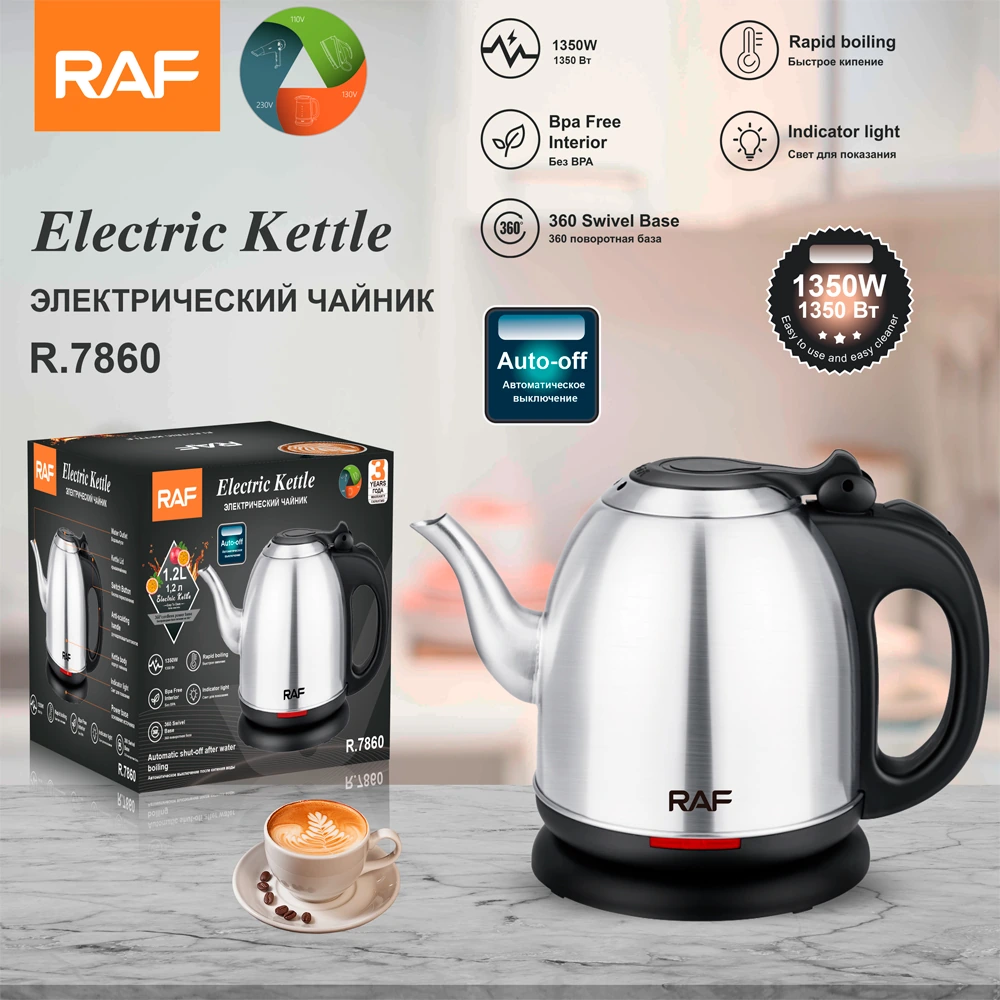
The RAF R.7860 stainless steel kettle provides a smaller reference: 1.2L capacity, 1350W power, automatic shut-off, and a 360-degree base are listed on the page. It gives a buyer a different range position from a 2.0L glass model rather than merely another finish.
Capacity must be checked in use, not only on paper
Confirm rated capacity, practical fill marks, minimum fill level, kettle weight when full, and pouring clearance. A large kettle can be attractive in a specification table but awkward if the handle balance is poor or the lid opening makes filling difficult. Sample testing should include a full-capacity pour, not just a quick boil with a small amount of water.
Choose Controls That Match the Price Tier
Keep a basic model genuinely simple
For an entry range, a clear switch, indicator light, reliable automatic shut-off, and accessible water level may be more valuable than extra programs. Every additional control needs artwork, manual content, testing, and customer-service support. If the sales channel cannot explain a feature in one short product-page section, that feature may not be helping the offer.
Treat temperature control as a system
Temperature display, selectable settings, and keep-warm functions should be checked together. Review how the kettle starts, whether the selected setting remains visible, how long keep-warm runs, what happens after the kettle is lifted from the base, and how the controls recover after power loss.
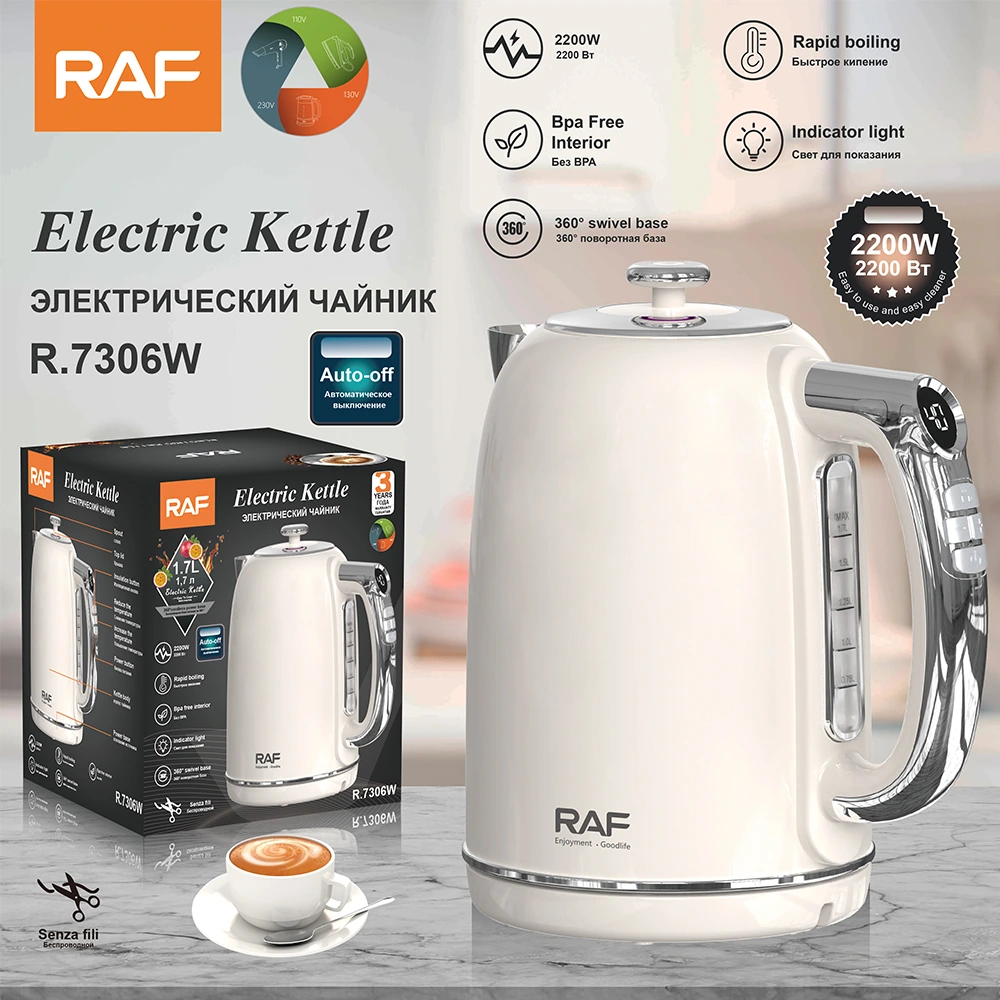
The RAF R.7306 LCD electric kettle illustrates this feature-led direction. The current page lists a 220V, 2200W version, 50-60Hz frequency, and customer-logo support. Those values are reference data, not a universal export specification. The quotation and sample must state the version intended for the destination market.
Put Safety and Compliance Evidence in the RFQ
Ask about functions, then ask how they are verified
Automatic shut-off, boil-dry protection, lid retention, base stability, strain relief, insulation, and accessible surface temperature deserve specific checks. Marketing wording is not evidence on its own. Ask which reports or certificates cover the exact model, voltage, plug, controller, and materials being quoted. The destination-market importer or a qualified test partner should confirm which requirements apply.
Water-contact materials also need a clear declaration. Request the material specification for the inner body, lid parts, filter, seal, and any plastic that contacts hot water or steam. If a supplier describes a kettle as BPA-free or food-grade, ask what component scope and supporting document sit behind the statement.
Control changes after approval
Record the controller, heating element, power cord, plug, thermal protection parts, and key material specifications in the approved sample file or bill of materials. A substitute may look identical but change performance or compliance evidence. The purchase agreement should state how component changes are reported and approved.
Include Packaging and Logistics in the Product Specification
Retail packaging is not a final decoration step. Confirm the color-box dimensions, master-carton quantity, carton size, gross and net weight, insert layout, bag or protective materials, barcode position, manual language, and shipping marks before the order is released.
Glass kettles need particular attention to movement inside the box and protection around the body, base, handle, and lid. For any model, inspect a packed sample and compare carton data with the quotation. Accurate packed dimensions help buyers estimate container use, warehouse space, marketplace fulfillment fees, and shelf fit before artwork is finished.
Ask for a dimensioned packaging drawing and a fully packed sample. The drawing should identify product orientation, base and accessory positions, cable restraint, and the space reserved for the manual. If the order will move through parcel networks as well as pallet distribution, tell the supplier before the pack is finalized. The same retail box may face very different handling. Any transit test should use the final product weight and materials, with the method and acceptance criteria agreed in writing.
Approve the Sample With a Repeatable Test Routine
Use the same sequence for every shortlisted model
Start with identity checks: model, revision, voltage, plug, rating label, manual, and accessories. Then run repeated boil cycles at the minimum and rated fill levels. Observe heating time, shut-off behavior, steam path, leaks, odor, handle comfort, lid operation, pouring, base contact, and stability. For a temperature-control model, test every setting and the keep-warm cycle.
Finish with cleaning access, scale visibility, filter removal, cord storage, finish quality, logo position, and packed-product inspection. Record photographs, measurements, failures, and requested changes in one sample report. A signed sample without a written exception list leaves too much room for interpretation.
Send a Quotation-Ready Electric Kettle RFQ
The RFQ should let a supplier price the intended product rather than guess at it. Include:
- Destination country, voltage, frequency, plug, cord, and required label language
- Sales channel, target user, planned price tier, and launch timing
- Preferred material, capacity, power range, control type, and keep-warm requirement
- Required shut-off and protection functions, plus the document list for the market
- Logo location, colors, control-panel artwork, manual, barcode, and packaging scope
- Sample quantity, sample tests, inspection plan, and approved-change procedure
- Order quantity, packing data, spare-part request, warranty terms, and quotation validity
RAF presents its ODM/OEM process as demand communication, drawing and print confirmation, sample or contract approval, mass production, packing and shipping, and delivery settlement. A detailed RFQ gives each stage a clearer approval point.
FAQ
What capacity works best for a wholesale electric kettle range?
There is no single best capacity. A compact 1.0L to 1.2L model may suit office, travel, or smaller-household positioning, while 1.7L to 2.0L formats can support family and shared-use offers. Check full-kettle weight, fill marks, carton size, and channel expectations before choosing.
Is glass or stainless steel better for private-label kettles?
Glass gives clear water visibility and a strong visual presentation. Stainless steel can support compact, conventional, or double-wall designs. The better choice depends on the price tier, user handling, cleaning expectations, packaging, and the exact construction of the model.
Which documents should an importer request from a kettle supplier?
Request documents tied to the quoted model and market version, including the rating specification, materials declarations, applicable test reports or certificates, manual, label artwork, and packing data. A local compliance specialist should confirm the required scope for the destination country.
What should be tested on an electric kettle sample?
Check repeated boiling, automatic shut-off, dry-operation protection where specified, leaks, steam direction, lid and handle behavior, pouring, base contact, controls, temperature settings, cord and plug, labels, cleaning access, finish, and the complete retail pack.
Turn the Specification Into a RAF Project
Prepare the market version, preferred material and capacity, control requirements, branding files, packaging level, order quantity, and sample plan before requesting a quote. Buyers can then contact RAF about an electric kettle project with a brief that is ready for product matching, customization review, and quotation.


