
A private-label air fryer should fit a sales channel before it carries a logo. Importers, distributors, wholesalers, and appliance brands need to decide who will buy it, how much counter space it may occupy, which features can support the retail price, and what packaging the channel expects. The RAF air fryer range provides useful starting formats, from a compact single basket to a smart touch-screen model and a double-stack dual-drawer design. This guide shows how to turn those options into a focused OEM/ODM request rather than a loose list of features.
Quick Answer: How Should Buyers Choose a Private-Label Air Fryer?
Begin with four decisions: target market, sales channel, cooking capacity, and control style. Then define the electrical version, branding, carton, manual language, and sample approval method. A single-basket model can support a straightforward everyday range, while a dual-drawer model gives retailers a stronger family or parallel-cooking story.
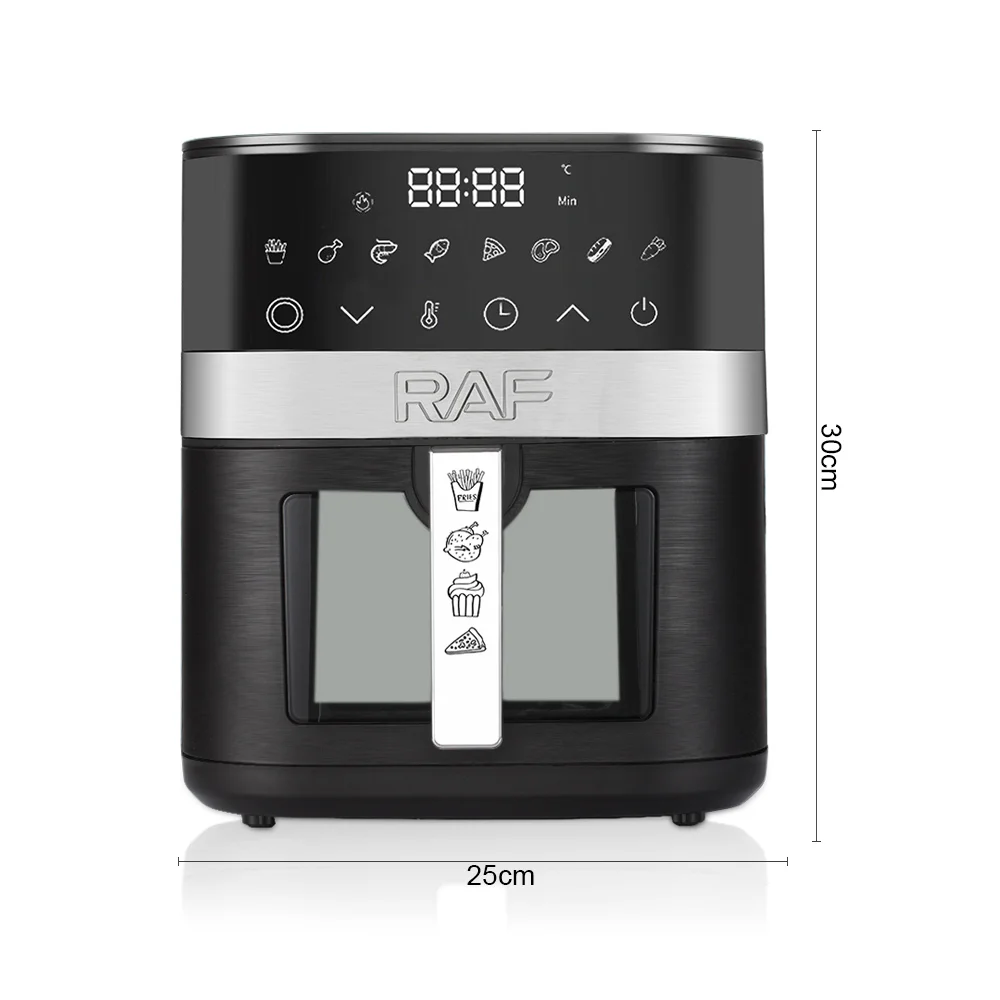
For example, the RAF R.5278 5L air fryer is listed with 1400W power, touch-screen control, an 80-200 C temperature range, and a viewing window. It is a practical reference when a buyer wants a clear single-basket proposition. Final electrical, artwork, packaging, and commercial details should be agreed for the selected market and order.
Start With the Channel, Not the Feature List
An online marketplace can explain presets, basket layout, and cleaning details across a long product page. A supermarket or catalogue may have only a photo, a few specifications, and a short benefit line. The product brief should reflect that difference. State whether the air fryer will be an entry model, a compact upgrade, a feature-led appliance, or a family-size option.
The expected user matters too. Small households may value a manageable footprint and simple controls. Family buyers may respond more strongly to two cooking zones or a larger total capacity. These are merchandising choices as much as technical ones. Once the retail role is clear, RAF can discuss a more relevant model, control panel, color direction, and package instead of quoting against an unfocused request.
Compare Three RAF Air Fryer Formats
The following models represent different private-label positions. They are not merely capacity variants, so buyers should compare the product story as well as the numbers.
| RAF model | Page-supported reference | Suitable range position |
|---|---|---|
| R.5278 | 5L, 1400W, touch screen, viewing window | Everyday single-basket range |
| R.5397 | 4.0L cooking bowl, 1500W heating, 2-in-1 cooking design | Compact, feature-led range |
| R.5383 | 12L total, two 6.0L drawers, 2800W, digital touch panel | Family-size or parallel-cooking range |
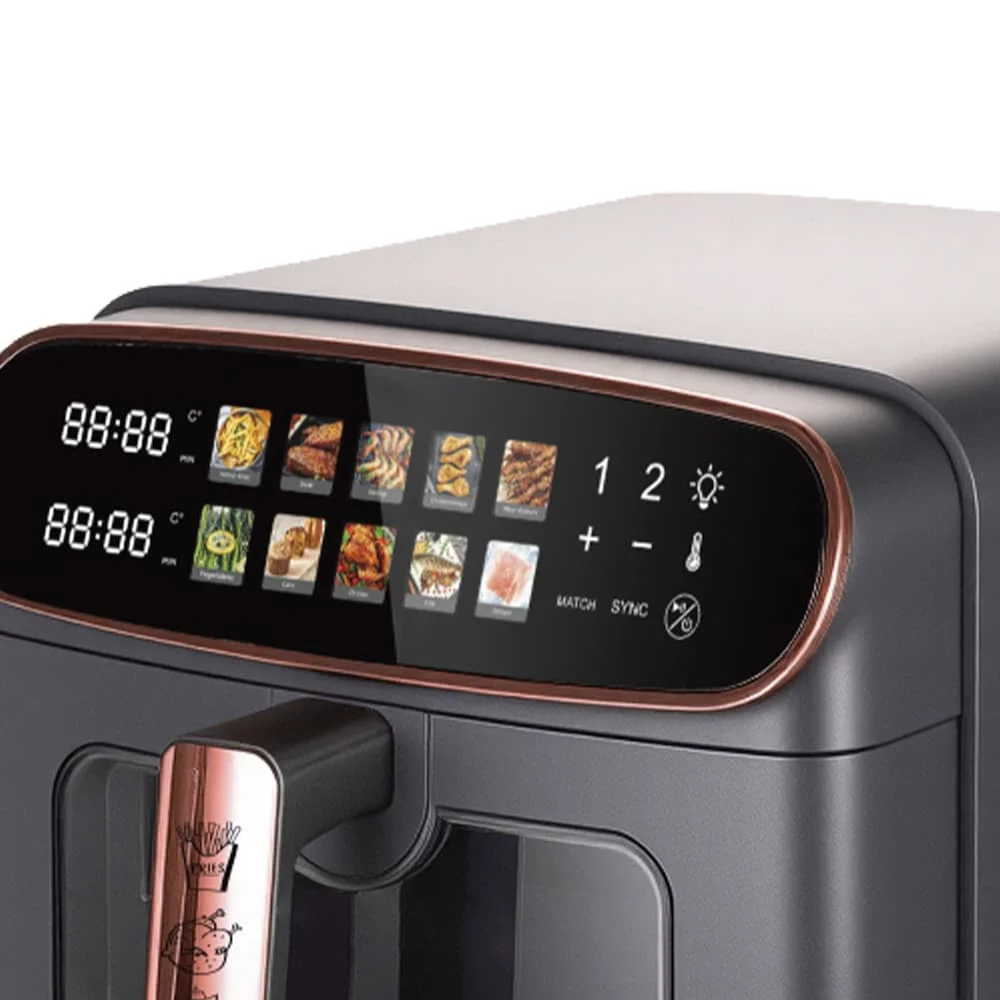
The RAF R.5397 smart touch-screen air fryer is presented with a 4.0L cooking bowl, 1500W heating, and a 2-in-1 design for frying, roasting, baking, and reheating. It can suit a buyer who wants a compact appliance with more functions to describe. During sample review, check the control response, display language, access to the cooking bowl, and cleaning routine. Those details help the retailer build a credible product page and instruction set.
The RAF R.5383 double-stack air fryer takes a different route. RAF lists 12L total capacity, two 6.0L drawers, 2800W power, 360-degree air circulation, and a digital touch panel. Its stacked layout creates a clear family and multi-dish proposition. Buyers should confirm the intended drawer operation, power version, control logic, carton dimensions, and plug before preparing retail claims or artwork.
The right option depends on the job the product must perform in the range. R.5278 keeps the brief direct. R.5397 adds a feature-led story without moving to two drawers. R.5383 gives the line a visibly different format for buyers who value two cooking zones.
Choose Controls and Basket Layout for the Retail Position
Controls affect both use and presentation. A knob interface can support familiar operation and a short instruction path. A touch screen offers more room for icons, programs, and a digital retail story. For either choice, the RFQ should identify the required temperature and timer behavior, display or marking language, preset expectations, and artwork approval process.
Basket layout deserves the same attention. Compare the external footprint, drawer access, usable cooking space, handle feel, tray fit, and cleaning access. A larger stated capacity is not automatically the better commercial choice if the carton is difficult for the channel or the appliance occupies too much shelf space. The format should reinforce the planned price point and user promise.
Build an RFQ That RAF Can Act On
A useful RFQ connects the product to the launch plan. It does not need to be long, but it should remove the questions that would otherwise produce a generic quotation. Include:
- Target country or region, voltage, frequency, plug, and required label language
- Sales channel, intended user, range position, and expected cooking occasions
- Preferred RAF model or format, capacity, basket arrangement, controls, and key features
- Logo placement, housing color, control-panel artwork, manual, barcode, and carton requirements
- Accessories, spare-parts expectations, sample quantity, and sample approval method
- Target order quantity, inspection expectations, packing level, and required quotation fields
This brief gives RAF a basis for discussing the model, electrical setup, customization, sample route, and packaging together. It also makes quotations easier to compare because every supplier response is tied to the same market requirements.
Move From the Brief to an OEM/ODM Project
The RAF OEM/ODM workflow covers demand communication, drawing and print confirmation, production samples or contract signing, mass production, packing and shipping, and delivery settlement. Buyers can use that sequence as an approval framework.
1. Share the commercial and product brief
Send the market, channel, selected reference model, target quantity, electrical requirements, branding direction, packaging level, and sample expectations. Identify which points must be confirmed before quotations are evaluated.
2. Confirm design and print files
Review the housing finish, logo position, control-panel artwork, carton, manual language, barcode, and warning information. Give each approved drawing and artwork file a revision number so later changes remain traceable.
3. Approve a production-intent sample
Test the sample against the planned market version. Review controls, cooking modes, basket or drawer fit, cleaning access, accessories, rating label, manual, and package handling. Record approved changes in one list before production release.
4. Align production and shipping instructions
Confirm the model, specification, artwork revision, inspection method, packing list, and shipping marks. MOQ, lead time, warranty, and after-sales terms should appear in the quotation or contract for the selected project rather than being assumed from a general product page.
Compare Samples With One Repeatable Review
Use the same sequence for each shortlisted air fryer. First verify the model number, revision, rating plate, voltage, plug, and documents. Then test control response, timer, temperature settings, cooking modes, and power recovery. Check basket or drawer movement, handles, tray fit, coating, usable space, and cleaning access. Finish with the manual, accessories, labels, barcode, carton artwork, and packing arrangement.
A consistent review reveals meaningful differences between samples. It also keeps the final decision connected to the target channel rather than whichever model makes the strongest first impression. Photographs, test notes, open questions, and approved changes should be stored with the sample record.
Request a RAF Private-Label Air Fryer Review
Send RAF the target market, preferred model or format, target quantity, voltage and plug, control language, logo and color requirements, packaging level, and sample plan. With that information ready, buyers can discuss the specification and customization plan with RAF and receive a project-specific response.
Conclusion
A strong private-label air fryer project starts with a clear retail role. Capacity, basket layout, controls, footprint, artwork, packaging, and sample criteria should all support that role. RAF offers three distinct references for the conversation: R.5278 for a direct single-basket brief, R.5397 for a compact feature-led offer, and R.5383 for a double-stack dual-drawer range.
FAQs
Q1: What is the MOQ for private-label air fryer orders?
MOQ depends on the model, customization requirements, and packaging needs. Buyers can contact RAF with the target format, quantity, destination market, branding scope, and carton plan for specific wholesale requirements.
Q2: What information should buyers include in an air fryer OEM/ODM inquiry?
Include the target country, voltage, plug, sales channel, preferred capacity and basket layout, controls, logo, color, manual language, packaging, sample quantity, target order quantity, and inspection expectations.
Q3: Can RAF support custom logos and retail packaging?
RAF describes an OEM/ODM process that includes demand communication and drawing and print confirmation. Available logo, color, control-panel, manual, and carton options should be confirmed for the selected model and order.
Q4: How should an importer approve an air fryer sample?
Use a written checklist covering the electrical version, controls, cooking modes, basket or drawer fit, cleaning access, accessories, labels, manual, carton, and agreed artwork. Record every required change before production approval.
Q5: Which RAF model suits a dual-drawer private-label range?
R.5383 is RAF’s double-stack reference in this comparison, with two 6.0L drawers and 12L total listed capacity. Buyers should confirm the final power, controls, packaging, and market version with RAF.


