
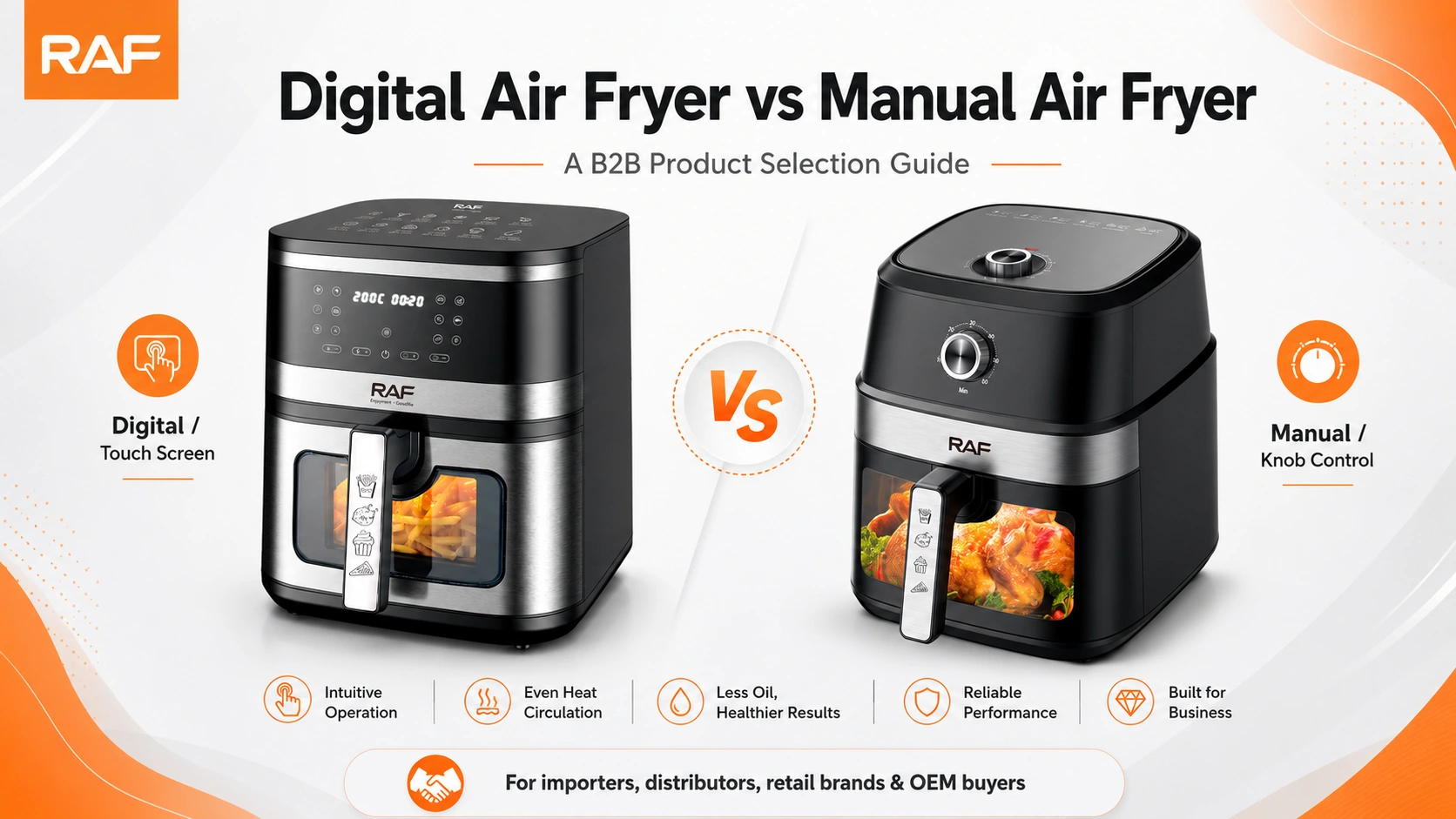
For importers, distributors, retail brands, and OEM buyers, the choice between a digital air fryer vs manual air fryer is not only about appearance. Control type affects price positioning, user experience, product training, packaging claims, after-sales risk, and SKU planning. A manual air fryer may fit entry-level wholesale channels, while a digital touch screen air fryer may support stronger retail display and private label differentiation. The right decision depends on the target market, order quantity, control panel requirements, voltage, plug type, capacity, and sales channel.
Quick Answer: Should Importers Choose Digital or Manual Air Fryers?
Manual air fryers are usually better for price-sensitive channels, simple operation, and entry-level wholesale programs. They are easier to explain because users mainly adjust time and temperature with knobs. Digital air fryers are usually better for e-commerce, supermarkets, appliance stores, and private label projects where touch screens, preset programs, and display design can create a stronger product story.
| Control Type | Better For | B2B Value |
| Manual / Knob Control | Entry-level retail, wholesale, simple household use | Lower interface complexity and easy operation |
| Digital / Touch Screen | E-commerce, supermarkets, private label, premium SKU | Stronger visual appeal and more display functions |
Buyers comparing control types can first review the air fryer product category to understand available RAF models across mechanical, digital, single-basket, and double-basket designs.
What Is the Difference Between a Digital and Manual Air Fryer?
A manual air fryer, also called an analog air fryer or mechanical air fryer, normally uses physical knobs for timer and temperature control. A digital air fryer uses a control panel, display, touch buttons, and sometimes preset cooking programs. The difference matters because the control interface changes how the product is sold, used, serviced, and customized.
Manual / Analog Air Fryers: Simple Knob Control
Manual air fryers suit markets where buyers want simple operation, clear pricing, and low learning cost. They are especially useful for discount retail, regional wholesale, and users who prefer direct time and temperature control without menu navigation.
For procurement, the key is not only whether the knob works. Buyers should check the knob feel, printed scale clarity, timer consistency, temperature range, handle structure, and packaging protection. RAF product materials include knob-control air fryers such as a 4.0L model with mechanical timing and temperature control, showing how manual control can serve compact household demand.
Digital Air Fryers: Touch Screen, Display and Presets
Digital air fryers are suitable when the sales channel needs a more modern appearance, visible function labels, and stronger product images for online listings. Touch screen control can help retailers present preset menus, temperature settings, timer functions, and cooking modes more clearly.
However, digital does not automatically mean better for every buyer. Importers should verify panel response, display brightness, icon language, preset logic, control board configuration, and sample performance after transportation. These details should be checked against the product specification before mass production.
Digital vs Manual Air Fryer Comparison for B2B Buyers
Cost, Retail Price and Inventory Turnover
Manual air fryers often fit lower retail price bands because the control interface is simpler. This can help distributors move volume in price-sensitive markets. Digital air fryers may support higher retail prices when the target channel values touch panels, visual displays, and preset functions.
The correct comparison should include landed cost, packaging volume, warranty expectations, replacement parts, retail margin, and inventory turnover. A low-cost manual model may perform well in one channel, while a digital model may generate better shelf appeal in another.
User Experience and Target Consumer Segment
Manual air fryers are easier for users who only want to set time and temperature. They may be suitable for older users, first-time buyers, small households, and markets where product training must be minimal.
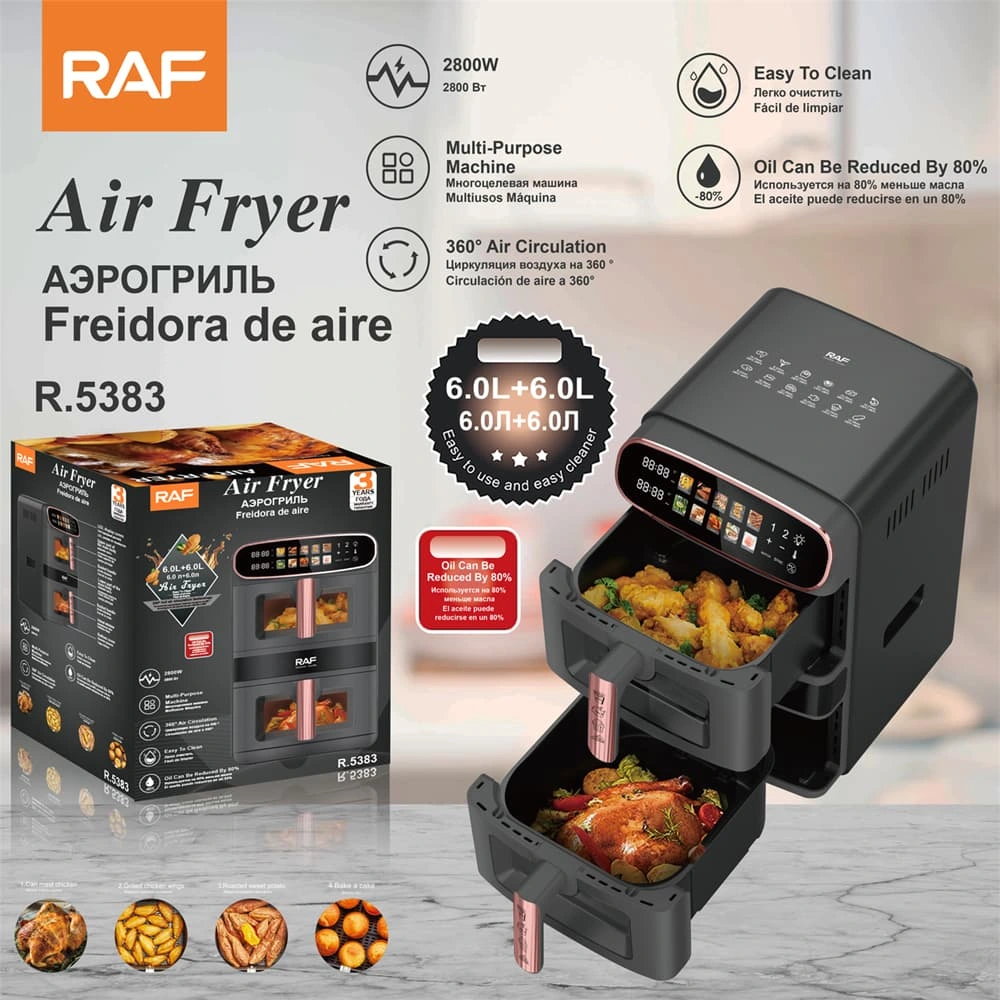
Digital air fryers fit buyers who expect a more modern interface. For e-commerce, product images showing LED display, touch screen control, window design, or preset menus can help explain value quickly. The decision should follow the end user’s habits, not only the buyer’s preference.
Control Panel, Preset Programs and Market Positioning
For private label air fryer projects, the control panel becomes part of the brand identity. Digital touch screen air fryer OEM projects may require customized icons, panel language, logo placement, manual language, and gift box claims. Manual air fryers also require attention to printed temperature and timer markings.
A useful rule is simple: manual control supports straightforward value positioning; digital control supports stronger differentiation, but needs more detailed sample confirmation.
Which Air Fryer Control Type Fits Different Sales Channels?
Discount Retail and Entry-Level Wholesale Channels
Manual or knob control air fryers are practical for entry-level wholesale channels where buyers focus on stable basic function, simple explanation, and accessible pricing. They are not only “low-end” products; they are suitable when the market values direct operation and fewer interface steps.
Procurement teams should check mechanical consistency, knob assembly, carton protection, and whether the control markings match the target market language.
E-Commerce, Supermarkets and Appliance Stores
Digital air fryers are more suitable for product pages, shelf displays, and retail channels where visual features matter. Touch screen panels, digital timers, large windows, and preset cooking icons can create clearer selling points.
Retail buyers building a wider kitchen appliance catalog can also review RAF small kitchen appliances to compare air fryers with related categories for channel planning.
Private Label and OEM Air Fryer Programs
For private label buyers, both control types can work. Manual models are suitable for simple, price-friendly private label lines. Digital models are better when the brand wants stronger visual differentiation or market-specific panel design.
Before confirming an OEM air fryer order, buyers should confirm logo position, control panel artwork, preset icon language, manual language, rating label, gift box design, sample approval process, and after-sales parts needs.
Procurement Risks: What Buyers Should Check Before Bulk Orders
Mechanical Timer, Knobs and Temperature Accuracy
Manual air fryer risks often come from mechanical consistency. Buyers should test repeated knob rotation, timer return, temperature control, handle fit, and printed scale durability. If the product will be shipped long distance, packaging should be checked to reduce knob damage or loosening during transport.
Digital Panel Response, Buttons and Display Language
Digital air fryer risks are different. Buyers should test touch response, button logic, LED display clarity, preset program accuracy, and panel surface durability. If the destination market uses a specific language, the panel, manual, rating label, and gift box should be reviewed together.
Packaging, Plug Type and After-Sales Parts
Control type should be confirmed together with voltage, frequency, plug type, carton size, color box, instruction manual, and spare parts expectations. RAF product materials include 220V and 220–240V household appliance configurations in several categories, but exact air fryer settings should be verified by model.
RFQ Checklist for Digital and Manual Air Fryers
A clear RFQ should include:
- target control type: manual, knob control, or digital touch screen;
- capacity and basket structure;
- order quantity and sample request;
- voltage, frequency, and plug type;
- target market and sales channel;
- OEM needs: logo, panel language, gift box, manual, rating label;
- packaging and carton requirements;
- after-sales parts expectations;
- inspection or document requirements.
How to Choose the Right Air Fryer Supplier
Supplier Capability for Both Manual and Digital Air Fryers
A suitable supplier should help buyers compare manual, digital, single-basket, double-basket, drawer-type, and large-capacity options based on the market instead of pushing only one model. Zhejiang RAF Electric Appliance Co., Ltd. is described in company materials as a household appliance manufacturer with product lines covering small kitchen appliances, cleaning appliances, laundry equipment, heating and cooling appliances, large kitchen appliances, and beauty salon products. Buyers can review about RAF when checking supplier background.
When to Request Samples Before Confirming Bulk Orders
Samples should be requested before confirming bulk orders, especially when the control type affects retail positioning. Manual samples should be tested for knob control and temperature/timer behavior. Digital samples should be tested for touch response, display, preset logic, and panel language. After the sample is approved, packaging, artwork, manual, and final RFQ details can be confirmed.
Conclusion
Manual air fryers fit simple operation, entry-level wholesale, and price-sensitive markets. Digital air fryers fit e-commerce, supermarkets, appliance stores, and private label programs where display, preset functions, and modern appearance create stronger product value. The better choice depends on sales channel, target consumers, control interface, capacity, packaging, voltage, plug type, and after-sales expectations.
For wholesale or OEM projects, buyers can prepare the control type, target capacity, quantity, market, plug requirement, packaging needs, and sample request before using contact RAF for wholesale and OEM inquiries.
FAQs
Q1: Is a digital air fryer better than a manual air fryer?
A: A digital air fryer is better when the buyer needs touch screen control, preset menus, and stronger retail display. A manual air fryer is better when the market values simple operation, accessible pricing, and easy product explanation.
Q2: Are manual air fryers more reliable for wholesale buyers?
A: Manual air fryers can have lower interface complexity, but reliability depends on the timer, knob structure, thermostat, materials, packaging, and supplier quality control. These details should be tested with samples.
Q3: What is a knob control air fryer?
A: A knob control air fryer is a manual or analog air fryer that uses physical knobs to adjust time and temperature. It is suitable for buyers who want simple operation and clear user control.
Q4: Should private label brands choose digital touch screen air fryers?
A: Private label brands can choose digital touch screen air fryers when they need stronger visual differentiation, customized panel icons, and premium retail positioning. Manual models may be better for simple entry-level product lines.
Q5: What should be included in a digital air fryer RFQ?
A: A digital air fryer RFQ should include capacity, control panel requirements, preset functions, display language, voltage, plug type, quantity, logo needs, packaging style, manual language, and sample request.


