
A double-wall electric kettle can support a cooler exterior, slower heat loss, and a more substantial product feel, but the second wall does not define quality by itself. For private label buyers, the important questions are what each wall is made from, which parts contact water or steam, how heat bridges are controlled, and how the construction changes tooling, assembly, testing, packaging, and after-sales risk. Compare complete specifications and verified samples rather than treating “double wall” as a universal performance claim.
What Double-Wall Construction Changes
A single-wall kettle uses one main body between the hot water and the surrounding environment. A double-wall design adds an outer shell around the water vessel, leaving an air gap or another separation between layers. The exact spacing, attachment points, lid, rim, handle, and base determine how effectively the layers limit heat transfer.
The outer wall can reduce the temperature a user encounters on the main body, while the inner vessel contains the water and supports the heating system. It can also conceal seams and heating-related discoloration, giving the brand more freedom in color and surface treatment. However, the lid, spout, steam path, rim, and metal connection points may still become hot. Product copy should therefore describe the tested surfaces and conditions instead of promising that the entire kettle is safe to touch.
Benefits That Matter to Buyers and End Users
Lower accessible-surface temperature
A separated outer shell can reduce direct contact with the hot inner vessel. This is especially relevant for family kitchens, hospitality rooms, and shared offices, where users may brush against the body. The benefit should be verified at the stated fill level, voltage, ambient condition, and time after boiling. A cool-touch body does not replace automatic shut-off, boil-dry protection, a stable base, or a handle and lid designed for controlled pouring.
Improved heat retention between pours
The extra layer can slow heat loss after the kettle switches off. That may reduce the need to reboil soon after the first serving, but the practical benefit depends on wall spacing, materials, lid fit, starting volume, room temperature, and the waiting period. It should not be converted into an energy-saving percentage without a repeatable test that compares like-for-like products.
More options for product positioning
Because the inner and outer bodies have different jobs, a product team can combine a water-contact vessel with an exterior selected for grip, appearance, color, or resistance to everyday handling. The result can fit an entry, family, hospitality, or premium range. The architecture also adds parts and interfaces, so cosmetic flexibility must be balanced against assembly yield and serviceability.
Material Combinations and Their Trade-Offs
Stainless steel inner vessel with a PP outer shell
This combination separates the hot-water vessel from a molded polypropylene exterior. It can support a cooler-touch surface, color options, and integrated handle or trim features. Buyers should specify the stainless steel grade, thickness, finish, welds, and water-contact scope, then define the PP grade, color tolerance, texture, odor acceptance, and heat-aging test. The cost depends on material mass, mold complexity, cycle time, and how the two bodies are joined.
Stainless steel inner and outer walls
A metal exterior can create a premium visual position and may resist some forms of wear, but it can add material weight, forming operations, polishing, and dent risk. Thermal bridges at the rim or attachment points still need attention. A buyer should not assume that all-metal construction produces the lowest surface temperature or the best insulation; the complete wall design and test result decide that.
Glass and ceramic design directions
Borosilicate glass supports water visibility, while ceramic can provide a distinctive tableware appearance. In a double-wall concept, either direction can require additional joints, protective structures, tolerances, and packaging. Weight, breakage risk, thermal shock, water-level visibility, cleaning access, and replacement handling should be evaluated alongside appearance. Do not combine material claims from a single-wall glass or ceramic kettle with a double-wall platform unless the exact construction has been confirmed.
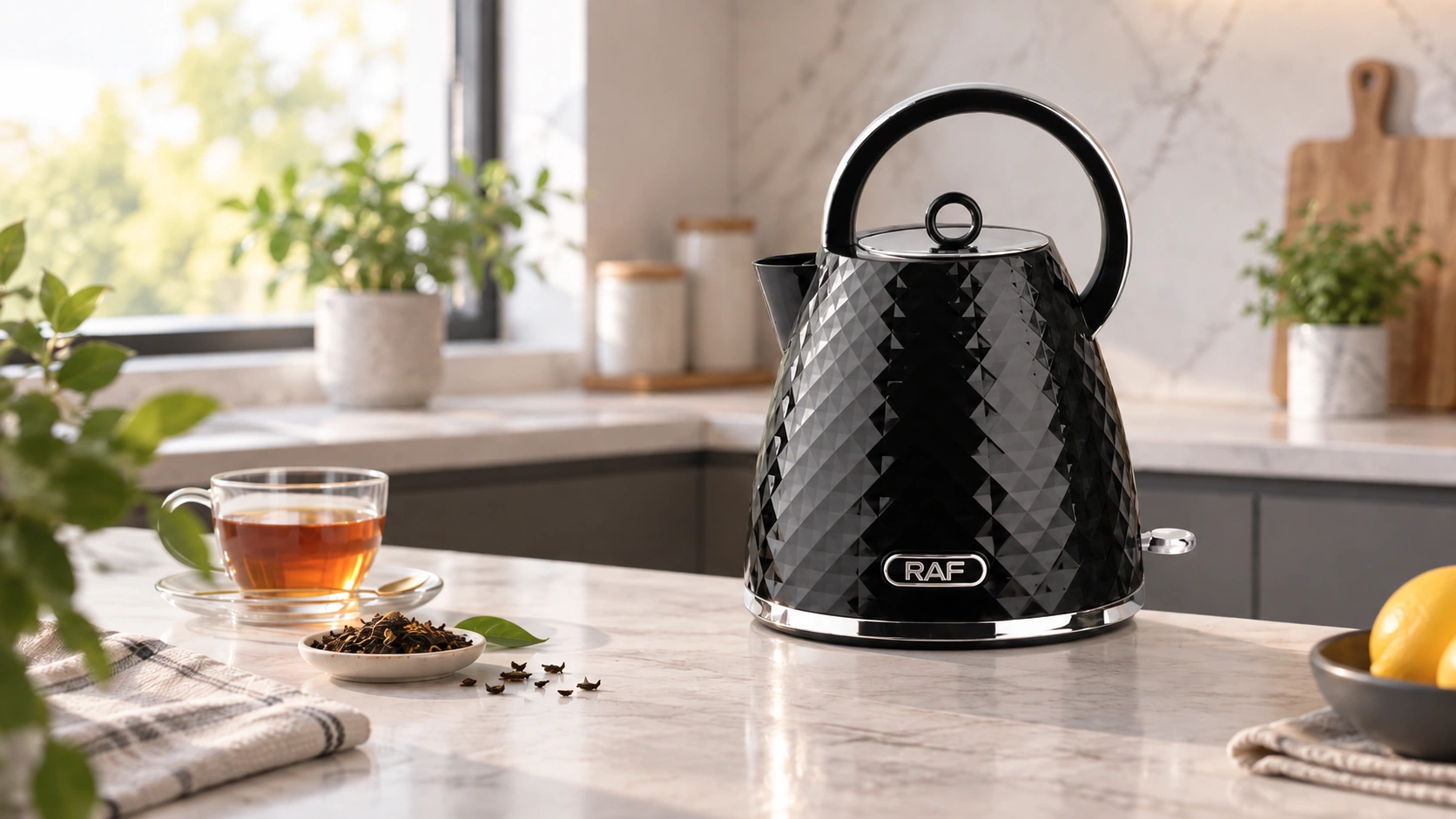
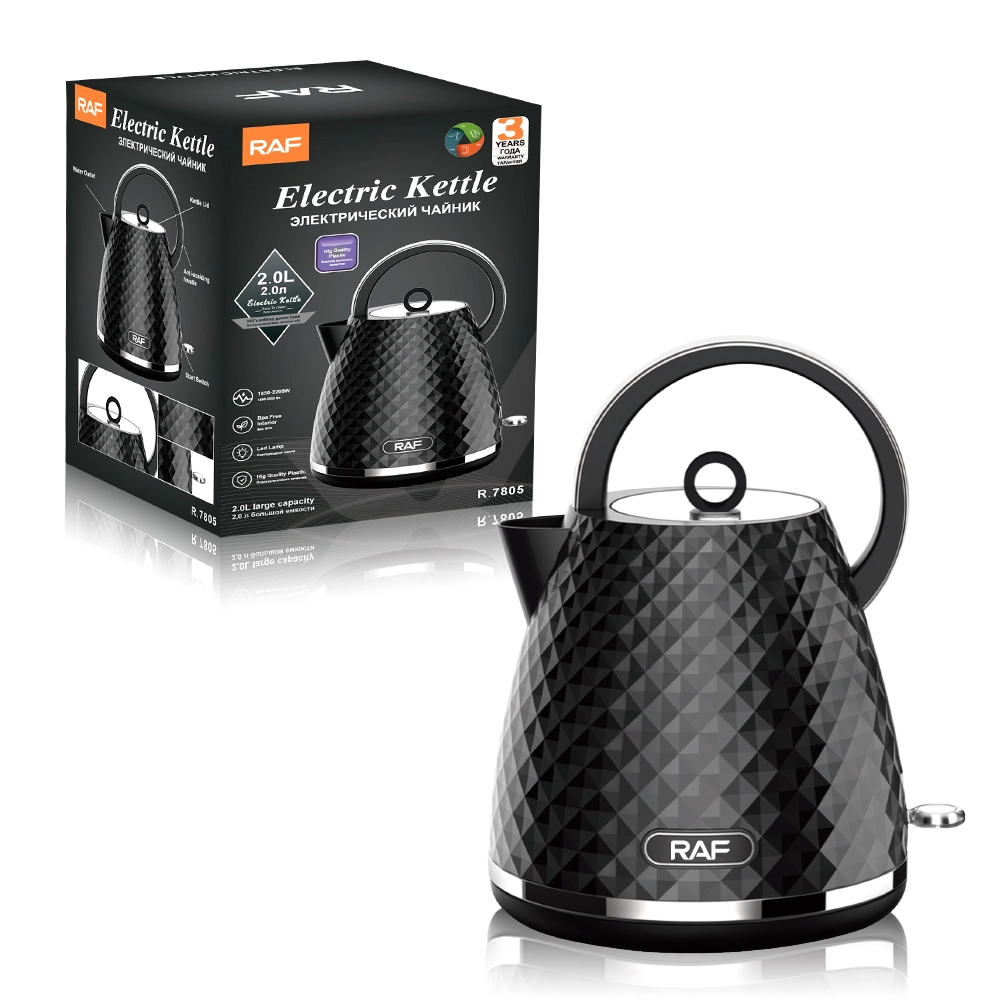
RAF’s R.7805 double-wall kettle provides a verified reference for a PP-and-stainless-steel double-wall direction. Its current page lists a 1.7L capacity, 2200W version, concealed heating, automatic shut-off, and a cordless base. Those figures should be treated as model-specific reference data and reconfirmed for the intended market version.
What Drives Double-Wall Kettle Cost
- Material specification. Steel grade and thickness, polymer grade, pigments, seals, filters, finishes, and total material mass affect the quotation. Water-contact declarations and supporting documents should match the exact bill of materials.
- Tooling and assembly. A second shell can require molds, forming dies, locating features, extra fastening or welding operations, and more inspection points. Complex shapes or tight cosmetic gaps can reduce assembly yield.
- Electrical and safety system. Heating power, controller, thermostat, thermal protection, cord, plug, base, and shut-off behavior must match the destination market. A lower body cost does not offset an unsuitable electrical configuration.
- Testing and quality control. Surface temperature, repeated boil cycles, dry-operation protection, leakage, lid retention, steam direction, drop or transit performance, and material consistency all require agreed methods and acceptance limits.
- Packaging and logistics. An extra wall may increase diameter or weight. Carton size, protective inserts, master-carton quantity, breakage exposure, container use, and fulfillment fees can change the landed cost more than a small unit-price difference.
- Customization and order structure. New colors, textures, logos, packaging, controls, or structural changes can add sample rounds, tooling, minimum-order requirements, and change-control work. Request a cost breakdown tied to one named configuration.
Turn the Design Choice Into an RFQ
A useful RFQ should define the destination country, voltage, frequency, plug, capacity, rated power, inner and outer materials, water-contact parts, wall construction, surface-temperature requirement, shut-off and protection functions, lid and pouring behavior, finish, branding, packaging, inspection plan, and change-control process. Include the test conditions for every measurable requirement.
Use RAF’s broader electric kettle range to compare capacities and control directions. The existing electric kettle wholesale guide covers market version, capacity, safety evidence, packaging, and sample approval in more detail. For customization, the published ODM and OEM process gives buyers a starting framework for requirement communication and sample confirmation.
Conclusion
Double-wall construction can improve handling comfort, heat retention, and design flexibility, but its value depends on the material stack and how the complete kettle is engineered. Private label buyers should compare verified surface temperatures, water-contact materials, protection functions, assembly quality, packaging, and landed-cost drivers under one market-specific specification. To review a target capacity, material combination, branding scope, quantity, and sample plan, contact RAF with a quotation-ready brief.
Frequently Asked Questions
Is a double-wall electric kettle safer than a single-wall kettle?
It may reduce the temperature of the main exterior body, but safety also depends on the lid, spout, steam path, handle, base, shut-off system, dry-operation protection, and verified market-specific design.
Which material combination is best for a double-wall kettle?
There is no universal best choice. Stainless steel with a PP outer shell can support color and handling comfort, while an all-metal exterior can support a different visual tier. The correct choice follows the target user, price position, testing, and service plan.
Does a double wall always keep water hot longer?
It generally aims to slow heat loss, but performance varies with wall spacing, materials, lid fit, water volume, and ambient conditions. Compare measured cooling curves under the same test method.
Why can two similar double-wall kettles have different prices?
Differences may come from material grade and mass, tooling, controller and protection components, assembly yield, finish, testing, documentation, packaging, order quantity, and customization. Ask suppliers to quote the same defined configuration.


